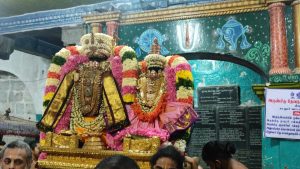


Ugadi would be celebrated with much fanfare on March 19, this year. The renowned festival needs no introduction, as it marks a New Year for the people belonging to the Telugu community. Unsurprisingly, Ugadi is considered as an auspicious occasion for the Telugu people and it is being celebrated by them all over India, as well as in abroad. The people belonging to other communities also join them in celebrating the unique festival with joy and enthusiasm. Ugadi or the devotees may wish to address it as ‘Yugadi’ is also known as ‘Samvatsaradi’(Beginning of the Year), is being celebrated in Karnataka, too with redoubled vigour.
Ugadi is being celebrated in Andhra Pradesh and in the adjacent Telangana on the first day of the ‘Chaitra Shukla Pratipada’, i.e. on the the waxing phase of the moon in the Chaitra month of the Hindu calendar. This day is being considered as an auspicious beginning of the new year for the people belonging to Andhra Pradesh, Telangana and Karnataka.. The coveted festival is being celebrated in the month of the Gregorian calendar, as it invariably coincides with Tamil month ‘Panguni’ or ‘Chithrai’ some times, and apparently, a day after Amavasya, depicting the 27th star ‘Revati’. Ugadi is pivoted on the first New Moon after March Equinox. For instance, this year, too, the Amavasaya falls on the preceding day of Ugadi, i.e. on the 18th instant.
Needless to say, the celebration of Ugadi takes place by drawing an array of colourful patterns on the floor christened as ‘Muggulu’, that is, mango leaf decorations on doors called ‘torana’, The people also make it a point of buying and presenting gifts, such as, new clothes, besides donating charity to the poor, downtrodden and the toiling masses. Importantly, on that eventful day, the people take oil massage and followed it up with special bath. Subsequently, they offer worship to the almighty, before focusing on the food items that are specially prepareed with delectable delicacies. For instance, In Karnataka vegetables, olige, vobattu and mango pickles would be prepared in a fine-tuned manner, alongwith the menu. In Andhra Pradesh, dishes such as “pulihora and bobbatlu are prepared along with other major items, including raw mango in a grand-gala manner to mark the importance of the festival. As per the custom, prayers are offered and houses are cleaned, so as to usher in novelty and prosperity.
It is quite natural for the devotees and their families in getting carried away on Ugadi and they do not miss the god-sent opportunity to draw rangolis at their residenceds to mark the occasion.. Other traditional floor decorations include flower petals and coloured rice.
It is pertinent to note that Ugadi has been an important and historic festival with medieval texts and inscriptions recording major charitable donations to Hindu temples and community centres. The well-known festival is also observed as a new year by the Hindus in many other parts of India. For instance, it is celebrated as ‘Gudi Padwa’ in Maharashtra. The Sindhis, celebrate on the same day by naming it as ‘Cheti Chand’, which is the beginning of their calendar year. Manipur also follows their footsteps by celebrating in the name of ‘Sajibu Nongma Panba’. Similarly, the Hindus at Bali in Indonesia, observe Ugadi in the name of ‘Nyepi’. In Sri Lanka, the festival is celebrated with utmost belief and bubbling enthusiasm.
In Tamil Nadu, too, the people celebrate Ugadi, as the government declares holiday for educational institutions and other important places. Tamil people join their Telugu brothers and sisters in celebrating the festival by offering sweets and fruits, besides culminating it with aplomb. Interestingly enough, a section of the people belonging to the Telugu community, known as Telugu-origin people, including some politicians, industrialists, cine-artistes and sportspersons speak Tamil, as well asTelugu at official places and at their residences, since they attach equal importance to the age-old ancient language. It is nothing unusual, as Chennai was once referred as ‘Chennai Pattina’, as both the states opted for it, but the former state chief minister, C. Rajagopalachari and the veteran Congress leader M.P. Sivananam, impressed upon their Andhra counterparts, including the then Andhra Pradesh chief minister, T. Prakasam, the importance of maintaining the city under the control of then Madras state, especially when another prominent leader Potti Sriramulu, was hell-bent on claiming it for Andhra Pradesh.
Ugadi emanated from Sanskrit words ‘yuga’ (age) and ‘adi’ (beginning) and it is being surmised as the beginning of a new age. What is the significance of Ugadi, the people would ask with curiosity? It is believed that on this day, Lord Brahma had created the universe. Thus, the stupendous festival is said to be the first day of the creation of the universe. It is also being felt in parts of India with a tinge of regret that Brahma has not been accorded due importance by a large number of devotees, similar to their offering of worship to Lord Vishnu and Shiva with an ill-conceived notion that since Brahma lied once, he does not deserve the prayer meant for other two almighties, and it looked quite strange, when he is looked at as mentor for ‘Guru’.
Little did the realisation dawn on a large number of people that by disowning Brahma, they are meting out a step-motherly treatment to his better-half and goddess Saraswati, whom it is believed, is the inheritor, motivator and solace for the people inclined to excel in educational and academic sphere at the highest level. It is being fervently believed that without the blessings of goddess Saraswati, a person cannot attain literacy at the highest level. Ugadi, the festival has provided fillip to the people with a hope that it would augur well for them in all aspects of life throughout the year.
Importantly, some of the marriages and functions are being fixed, bearing the festival in mind. Ugadi is also known for its significance, as it creates a path for other major festivals in India to follow its footsteps with immense joy and not, but not the least, with never-ending enthusiasm and pride.
K.V. Venugopal, Chennai.