
Janmashtami, popularly known as Krishna Janmashtami is the birthday of revered Lord Krishna which is celebrated with utmost enthusiasm and renewed vigour all over India every year. Like every year, the well-known festival would take place for two days, i.e. on September four and five this time around. According to the Hindu calendar, the auspicious occasion falls on the Ashtami or eighth day of the Krishna Paksh or dark fortnight of Bhadon month. It is pertinent to note that Janmashatami festival originated in Gokul and started engulfing the Mathura region, before spreading to the entire Uttar Pradesh and various parts of the nation. There is no iota of doubt that Lord Krishna is the epitome of love, faith, friendship, and peace.
The epic ‘Bhagawad Gita’ would not have been known, had Lord Krishna not been around to savour the people and to impart them the essence of life, besides the need to overcome the hurdles with poise and finesse. The story of Mahabharata has a lot to do with the life of Lord Krishna. It may be recalled that during the Dharma Yuddha or war between Pandavas and Kauravas, Lord Krishna played the charioteer of Arjuna, as he realised the need to counsel Arjuna on Dharma (righteous path), Karma (deeds), theistic devotion, yogic ideals, salvation and knowledge, among others, because Arjuna was in emotional turmoil after he was forced to annihilate his deadly-foes, even though they were his brothers and cousins. Lord Krishna comforted him and assuaged his ventilated grievances with a conviction that he had only eliminated the wrong-doers.
Lord Krishna was crystal-clear in his assertion that whenever the evil deeds rear their ugly head, he will destroy them with his iron-hand. He also stressed on the need to preserve the humility aspect to Pandavas. The Almighty Krishna was named “Makhanchor”(the one who steals butter) during his childhood days. The story goes around that he used to steal butter from every household of Gokul, without realising its adverse consequences and gravity of the situation, and not, but not the least, the volley of complaints that emanated from his neighbours and other surrounding places to his beloved mother, ‘Yasoda’ about his mischievous activities.
‘Dahi Handi’ was another important aspect of the festival that has been observed on the second day of Janmashtami, where the tantrums displayed by Lord Krishna with his intrinsic ability and uncanny anticipation would be explained to the crowd that would throng various temples all over the nation. An earthen pot or handi is filled with butter, ghee, dry fruits, and milk was kept at a considerable height and it was tied with ropes for the devotees to compete with each in climbing on each other before reaching the handi and breaking it with chanting of hymns like, “Govindaalare”.
Janmashatami is the favourite festival for children too, who look at Lord Krishna as their class-mate and friend, after they grew up listening to his mischievous deeds and fun-filled activities with abundant joy and enthusiasm. They derive immense pleasure in hearing the antics and tantrums displayed by Lord Krishna during his childhood days. Like every year, this time too, Janmashatami would be observed with much fanfare, especially in Mathura and Brindavan for about two days. The devotees would observe fast until midnight, the traditional hour of his birth.
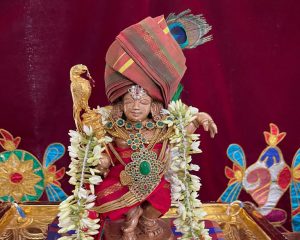
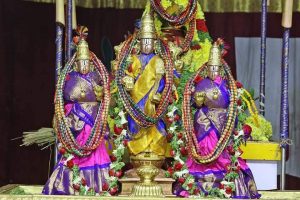
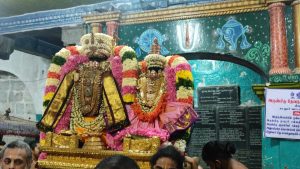
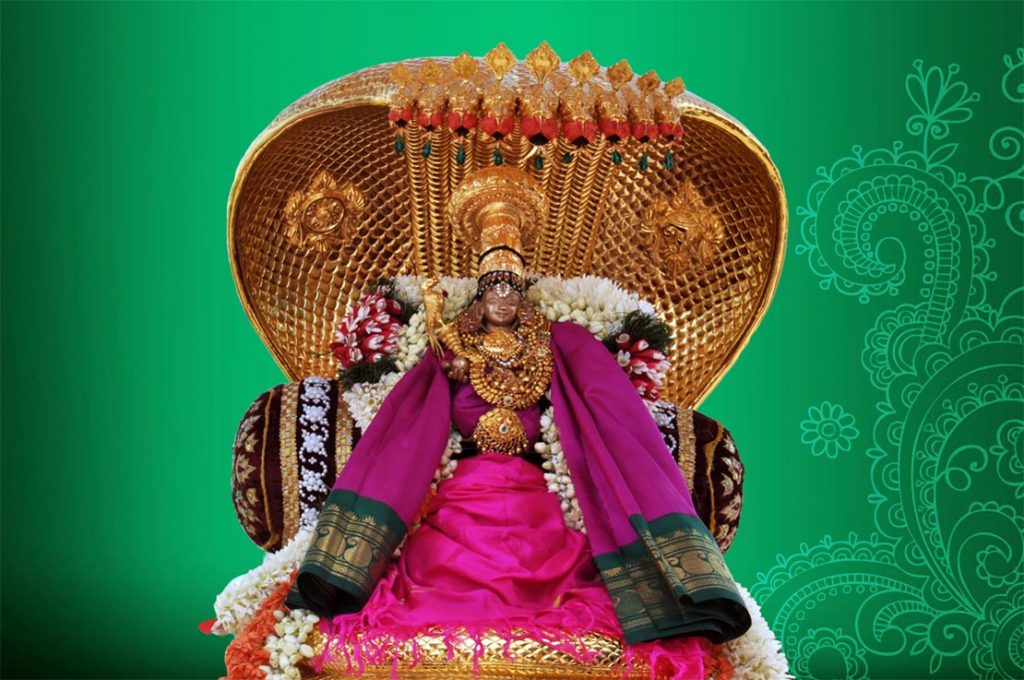
Subsequently, the image of Lord Krishna would be bathed in water and milk, dressed in new clothes, and worshipped with much adulation. Temples and household shrines would be decorated with leaves and flowers. Sweets would be initially offered to Lord Krishna before distributing it as prasadam to the people, who offered worship to him. The devotees of the revered Lord commemorate the events of his birth with elaborate representations of Mathura, where he was born, besides in the ‘Yamuna River’, over which he was transported to safety when the demon Kamsan was hell-bent on eliminating him.
Gokul, the reminiscence of Lord Krishna’s childhood days, using small images of the god, and little wonder a large number of animals and birds of the forest, join in the celebration of Janmashtami. Pots of milk are hung from tall poles in the streets, and the people form human pyramids and break the pots, besides imitating the almighty’s childhood prank with the cowherd boys, as the devotees would recreate the scene that enabled Lord Krishna and other children to steal the curds by dodging their mothers with utmost ease.
A large number of people open their bank accounts and take steps for other welfare activities during Janmashtami. Marriage-hunting also takes place during this time, besides the firm belief that the revered festival would augur well for the entire family, if any attempt is being made for progress on the education. A section of people do affirm that they are relieved from health complications, if any, on the occasion of Janmashatami. The devotees are also happy that Lord Krishna is the centre of attraction during the celebration of Deepavali. Janmashtami also preaches Ahimsa and Lord Krishna’s advice in Gita depicts that the people cannot claim anything as their own.
A 1500-year-old ancient Krishna temple is situated at Kottayam district in Kerala. The significant aspect of this temple is that it would remain open for the whole year and would be closed only for two minutes in a day, that is, from night 11.58 pm to 12.00 am to offer prasadam to Lord Krishna and the people around. The story goes around that since the god would remain hungry the temple would be closed for that particular time to feed him. It would be heartening to note that a large number of devotees thronging the temple would join their almighty in whetting their appetite.
K.V. Venugopal, Chennai.